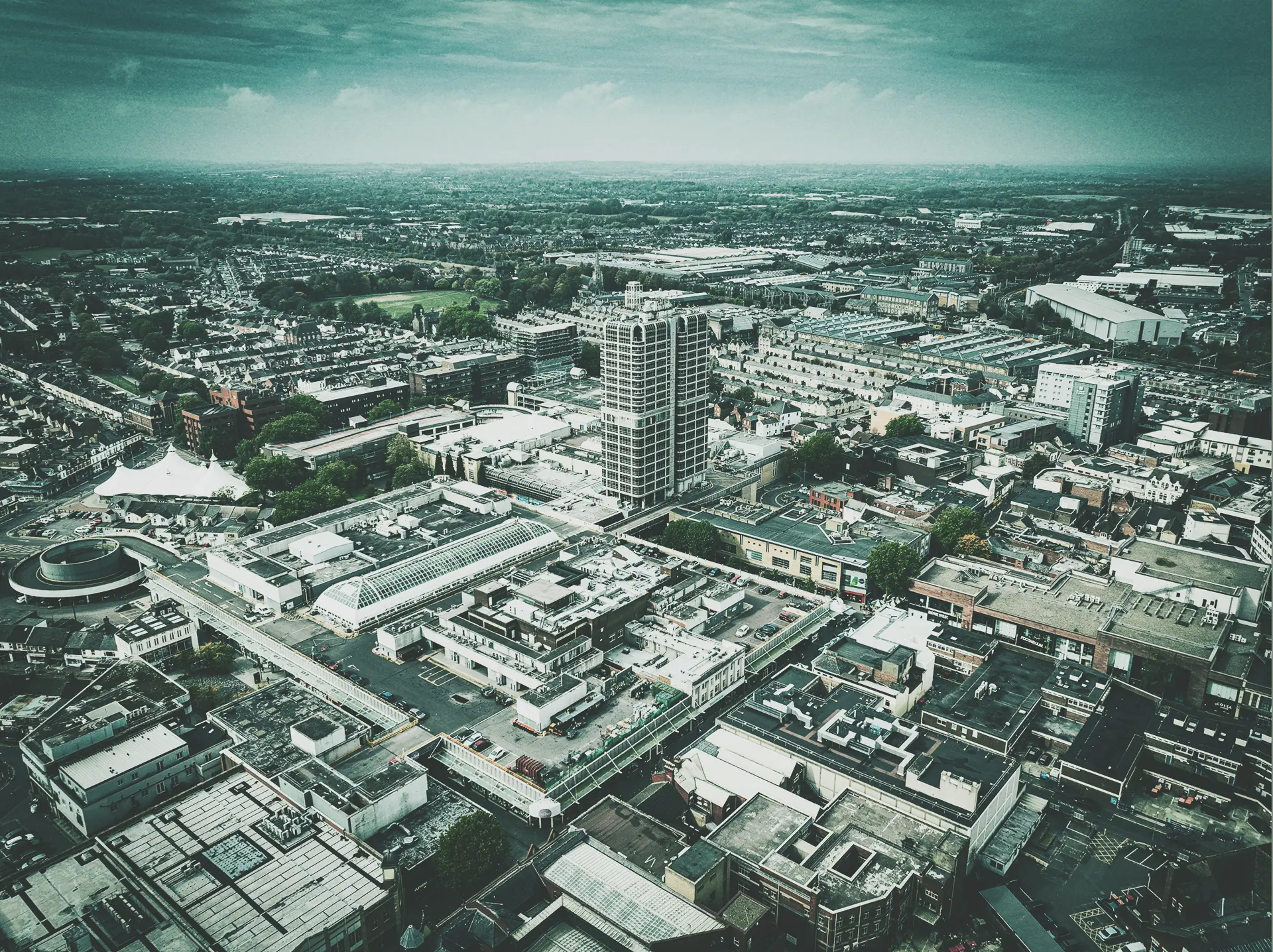
For much of the past decade, conversations about Swindon have followed a familiar script: empty shops, corporate departures and a town centre searching for purpose. It has been easy to compare the town with places that seemed to have discovered the formula for economic success while Swindon stood still.
That narrative has been repeated often enough to feel like fact. But it is increasingly out of date.
Away from the headlines, something more interesting has been happening. Not overnight, and not through a single transformative project, but through a steady accumulation of investment, entrepreneurship and confidence that is beginning to reshape both the town and its reputation.
Swindon is not trying to become Bristol, nor is it attempting to imitate Reading or Oxford. Increasingly, it is becoming a place with its own proposition; one built on advanced manufacturing, engineering, digital technology, financial services, logistics, education and an emerging creative economy.
For businesses already based here, that matters. For those considering relocating, it matters even more. The opportunity is no longer simply to operate in Swindon, but to help define what modern Swindon looks like. That presents both an opportunity and a challenge, because as investment increases, competition inevitably follows.
A town that is quietly changing
Recent years have seen substantial public and private investment across Swindon.
The regeneration of the Carriage Works and the surrounding Railway Village continues to create new commercial space for creative businesses, technology companies and education partners. The Workshed has become home to entrepreneurs, start-ups and growing SMEs, creating precisely the kind of collaborative environment that modern businesses increasingly seek.
Elsewhere, investment continues across Panattoni Park, Symmetry Park and other employment sites that reinforce Swindon's longstanding strength in logistics and advanced manufacturing. Financial and professional services remain significant employers, while technology businesses continue to emerge across the town.
None of this generates the national headlines attracted by London's skyline or Manchester's media district. But regional economies are rarely transformed through grand gestures. They evolve through hundreds of businesses making thousands of individual decisions to invest, recruit, innovate and grow, and that is precisely what appears to be happening across Swindon.
Confidence creates competition
Economic confidence has a predictable effect: as more businesses arrive, it becomes harder to stand out.
Companies that once relied on reputation or longevity suddenly find themselves competing with ambitious newcomers that understand marketing, digital visibility and customer experience. Having the best product is no longer enough, and neither is offering the best service.
Customers increasingly judge businesses long before they make contact. They visit your website, compare your positioning with competitors and look for evidence of expertise. They assess whether your business feels established, credible and professional, often forming those impressions in seconds.
In a growing economy, branding stops being a luxury and becomes part of the infrastructure that supports growth.
Swindon has never lacked capability
One persistent misconception about Swindon is that creativity happens somewhere else. In reality, many of the brands, websites, campaigns and digital products used nationally have been designed, developed or marketed by agencies and creative businesses based right here.
Swindon has always possessed talented designers, developers, strategists, photographers, filmmakers and marketers. What has often been missing is confidence in telling that story.
Perhaps that reflects the town's industrial heritage. Engineering has traditionally valued substance over presentation, and manufacturing has focused on performance rather than perception. There is integrity in that approach, but today's economy increasingly rewards organisations that can do both.
The businesses attracting attention are those capable of combining operational excellence with clear positioning, memorable identity and consistent communication. In other words, businesses that understand branding is not decoration, but commercial strategy.
The AI era makes brands even more important
Another shift is taking place at the same time. Customers are beginning to discover businesses through AI assistants as much as traditional search engines, and organisations are increasingly recommended because they demonstrate authority, expertise and consistency rather than simply ranking well for keywords.
That raises the bar.
Businesses need websites that explain clearly what they do, supported by genuine insight rather than generic marketing. They need visual identities that reinforce credibility and messaging that remains consistent across every customer touchpoint.
The strongest brands are becoming easier to discover because they are easier to understand.
A stronger Swindon deserves stronger brands
If Swindon is to compete nationally for investment, talent and innovation, it needs businesses capable of presenting themselves confidently on a regional, national and international stage.
That applies equally to manufacturers, technology firms, consultants, property businesses, hospitality companies and professional services. Every successful organisation contributes to the reputation of the place it calls home, and collectively they shape how investors, employees and customers perceive the town itself.
Strong businesses build strong places, and strong places attract stronger businesses. Over time, it becomes a virtuous circle.
More than a logo
Branding is sometimes dismissed as logos, colours or typography. Those elements matter, but they are the visible expression of something much larger.
The strongest brands begin by answering more fundamental questions: why should customers choose you, what makes your organisation different, and how do you want people to feel after interacting with your business? They ensure every employee can explain the same story, and that websites, proposals, presentations and marketing all communicate a consistent message.
When those pieces align, businesses grow with greater clarity and consistency. That process becomes particularly valuable in towns experiencing renewed economic confidence, where customers have increasing choice and expectations continue to rise.
Looking ahead
Swindon's future will not be defined solely by regeneration projects or investment announcements. It will be shaped by the ambition of the businesses already here: the companies that invest in people, the organisations that innovate, the entrepreneurs prepared to take risks and the employers who choose to build careers locally rather than elsewhere.
It will also be shaped by the brands that tell those stories well.
At Bravedog, we've had the privilege of working with organisations helping shape that future, from ambitious start-ups and scale-ups to established businesses, public sector organisations and landmark regeneration projects including Carriage Works and The Workshed. We've seen first-hand the quality of businesses operating in Swindon, and we believe the town's reputation increasingly deserves to match the calibre of the organisations driving its economy.
Swindon has never needed anyone to reinvent its identity. It simply needs more businesses willing to articulate, with confidence and clarity, what makes this place worth investing in.
The next chapter has already begun. The question is not whether Swindon is changing, but which businesses will lead the conversation.