Football has gone digital. Team news breaks on social media, statistics update in real time and every significant moment is clipped, posted and replayed within minutes. Yet the printed matchday programme keeps surviving. Not because supporters still need it, but because it gives the game something digital cannot: memory, meaning and something worth holding on to.
By every modern measure, the matchday programme should already be dead.
It is printed before the game, occasionally overtaken by events before it reaches the turnstiles, and incapable of delivering anything as quickly as the phone in a supporter’s pocket. Team news arrives online an hour before kick-off. Interviews are recorded, clipped and shared. Results, tables, transfers and statistics are permanently available, updated in real time and accessible without paying for another piece of print.
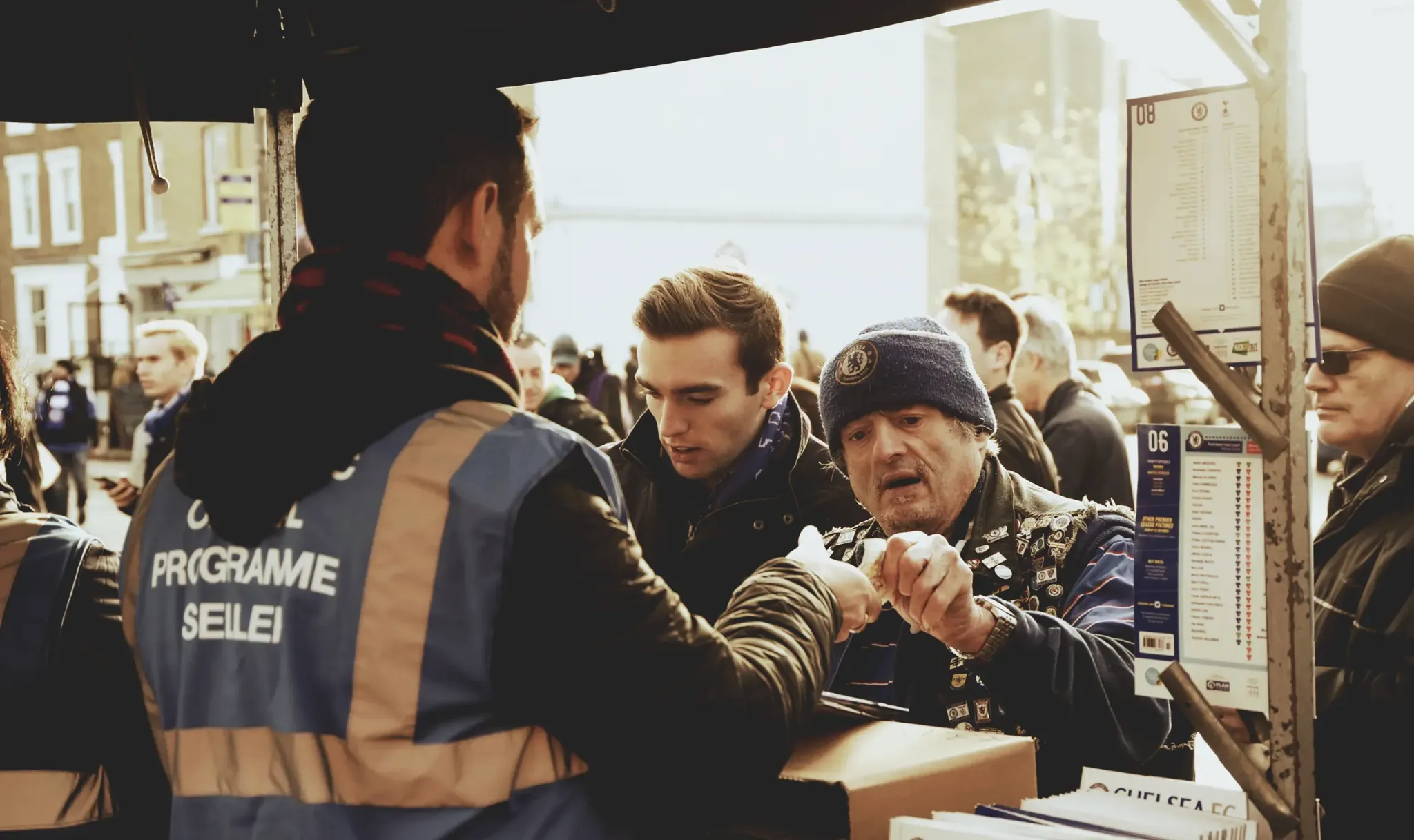
And yet, as supporters make their way towards the ground, programmes are still being sold.
They are bought by collectors, parents, children, groundhoppers, lifelong season-ticket holders and people who simply want something that says: I was here.
The programme has survived because its purpose has changed. It is no longer the fastest way to learn what is happening at a football club. It may not even be the most convenient. But speed and convenience were never the only reasons people bought one.
A programme is part of the occasion. It sits alongside the walk to the ground, the first glimpse of the floodlights, the smell of food outside the turnstiles and the familiar conversations that fill the hour before kick-off. It belongs to the ritual of football, and rituals are rarely improved by replacing everything physical with a screen.
Football moves on. Memory works differently
A match lasts for ninety minutes, plus whatever the officials decide to add while everyone looks anxiously at the clock. Then the whistle goes, the crowd disperses and the fixture becomes history.
Digital content records the result efficiently. It can tell us who scored, how much possession each team had and whether a shot was judged to be an expected goal or merely an unexpected thump into Row Z. What it struggles to preserve is the feeling of being there.
A programme does that almost accidentally.
It gets folded and pushed into a coat pocket. It picks up a crease, a coffee mark or the faint consequences of a wet Tuesday night. A team change might be written across the printed line-up. A child gets an autograph on the cover. Someone keeps it because the match mattered, then discovers it again years later and remembers far more than the final score.
That is the strange power of physical objects. They accumulate meaning after their practical use has passed.
Digital content is built for now. It succeeds by being immediate, accessible and shareable. It appears in a feed, competes for a few seconds of attention and is quickly replaced by whatever happens next. Even good content can become invisible within days.
Print behaves differently. It occupies space. It waits. It can disappear into a drawer for twenty years and return carrying an entire afternoon with it.
The programme is not simply a record of the match. It becomes evidence of a personal relationship with the club.
Its old job has disappeared
None of this means the matchday programme should continue unchanged.
For much of football history, the programme performed an essential information service. It carried news, fixtures, league tables, player appearances, messages from the manager and details that were difficult to find elsewhere. Supporters genuinely needed it to understand what was happening around the club.
That job has gone.
Trying to preserve the programme by filling it with information already available online is like printing yesterday’s weather forecast. The content may be accurate, but accuracy alone does not make it valuable.
A modern programme needs to recognise that it is no longer an information product. It is an editorial product and a piece of the matchday experience. Its value sits in the things that cannot be delivered by an automated feed: access, judgment, personality, visual storytelling and a meaningful connection between the fixture being played and the history surrounding it.
That changes the editorial question.
Instead of asking what information needs to be included, clubs should ask what supporters will genuinely want to read, see, remember and keep. Those are not the same thing.
A fixture list is useful. A revealing interview is memorable. A league table records where the club is today. A well-researched story helps explain how it got there.
The best programmes understand the difference.
The archive is not decoration
Football clubs sit on extraordinary archives. Photographs of packed terraces, lost grounds, changing kits, former players, promotions, disappointments and ordinary afternoons that gradually became part of the club’s identity.
These images are often treated as decoration. Something nostalgic to place behind a headline or use when a page needs visual interest. But every archive photograph contains a story, provided someone takes the time to find it.
A black-and-white portrait of a former player is not simply an old photograph. It can open a route into an entire career, a significant era in the club’s history and thousands of individual memories held by the supporters who watched it unfold.
An action photograph from decades ago carries its own history. The shirt, the sponsor, the mud, the packed terrace beyond the touchline and the unmistakable visual character of football from another age all begin telling the story before the caption is read.
The work lies in making the connection.
Who is in the photograph? When was it taken? What happened that day? Why does it matter to this fixture and to the people reading about it now?
Research transforms archive material from visual nostalgia into editorial substance. It allows a supporter who remembers the player to reconnect with a particular period of their life, while introducing a younger reader to someone who helped shape the club they inherited.
That is what history should do. Not sit behind glass, admired at a safe distance, but remain active in the present.
A matchday programme is one of the few places where that can happen naturally. Past and present occupy the same pages because they belong to the same continuing story.
Designing under pressure
From the outside, a programme can look like a straightforward piece of publishing. Set up a template, add the content, send it to print and repeat for the next match.
Football has other ideas.
Copy arrives late. Advertisements change. Photographs need replacing. A player leaves, signs or gets injured. A fixture is rearranged. Something happens on Saturday that makes part of Tuesday’s carefully prepared issue instantly irrelevant.
The production schedule does not pause to admire the problem.
This is where design becomes more than appearance. A strong programme needs a system capable of absorbing change without losing its identity. Typography, grids, image treatments, recurring features and page structures must create consistency while leaving enough flexibility for every issue to feel different.
Too much freedom and the season becomes visually fragmented. Every edition looks as though it belongs to a different club. Too much rigidity and the programme starts to feel mechanical, as if new words and pictures are being dropped into the same container every week.
The balance is familiarity without predictability.
Supporters should recognise the publication immediately, but still feel there is a reason to open it. The club’s identity should be present on every page without smothering the editorial content. Sponsors need appropriate visibility. Statistics need clarity. Historical features need room to breathe. Photography needs to carry emotion rather than merely fill space.
A good system makes all of that look effortless.
It rarely is.
The cover has one chance
The programme cover has perhaps the hardest job of all.
It must function as editorial packaging, a matchday poster, a club-brand asset and a future souvenir. It needs to attract attention at the ground, remain legible in a digital preview and look worthy of keeping once the game is over.
Putting a player on the front is not a creative strategy by itself. Neither is adding more effects, more headlines or more noise. The strongest covers usually begin with a clear idea connected to the fixture.
That idea might come from a current player, a significant anniversary, an archive image or a piece of shared history between the clubs. What matters is that it gives the issue a reason to exist.
When someone looks back through a collection, the cover should return them to that match rather than blend into every other edition from the season.
In a digital environment designed around endless movement, the cover asks for a moment of stillness. It says this game is worth marking.
That is a powerful role for a piece of print.
Tradition is not enough
There is an easy, sentimental defence of the programme. Football has always had them, supporters love tradition and therefore they should continue forever.
That argument is comforting. It is also lazy.
Print carries a financial and environmental cost. Supporters are being asked to pay for it. Clubs are investing time, editorial effort and production resources in creating it. A programme should not survive simply because stopping would feel uncomfortable.
It has to earn the right to be printed.
That does not necessarily mean making it larger, glossier or more expensive. More pages do not automatically create more value. Sometimes they simply create more pages.
It means being selective. Commissioning material that deserves attention. Using photography with intent. Editing properly. Giving stories sufficient space. Creating a publication that feels coherent rather than assembled from everything that arrived before the deadline.
If the programme offers nothing beyond what supporters have already seen on their phones, they will eventually stop buying it. Habit can protect a product for a while, but it cannot protect it indefinitely.
The answer is not to imitate digital content on paper. It is to become more deliberately physical, more collectible and more thoughtful.
A lesson beyond football
The survival of the matchday programme reveals something wider about communication.
New technology does not make an older format irrelevant. An older format becomes irrelevant when it stops understanding what it is for.
Print cannot beat digital for speed, reach, measurement or convenience. It can offer concentration, tactility, permanence and a sense of occasion. Those qualities are not useful everywhere, but where they matter, they matter enormously.
Brands often make the mistake of treating channels as interchangeable containers. The same message is pushed onto a website, into an email, across social media and onto a printed page with little consideration for how people behave in each environment.
Good communication begins by understanding the strength of the medium.
Digital is excellent at extending the conversation around a match. It builds anticipation before kick-off and keeps supporters connected afterwards. Print can do something else. It can distil the occasion, create a pause within it and leave behind an object that acquires value over time.
One does not need to defeat the other. They need to know their roles.
Still worth keeping
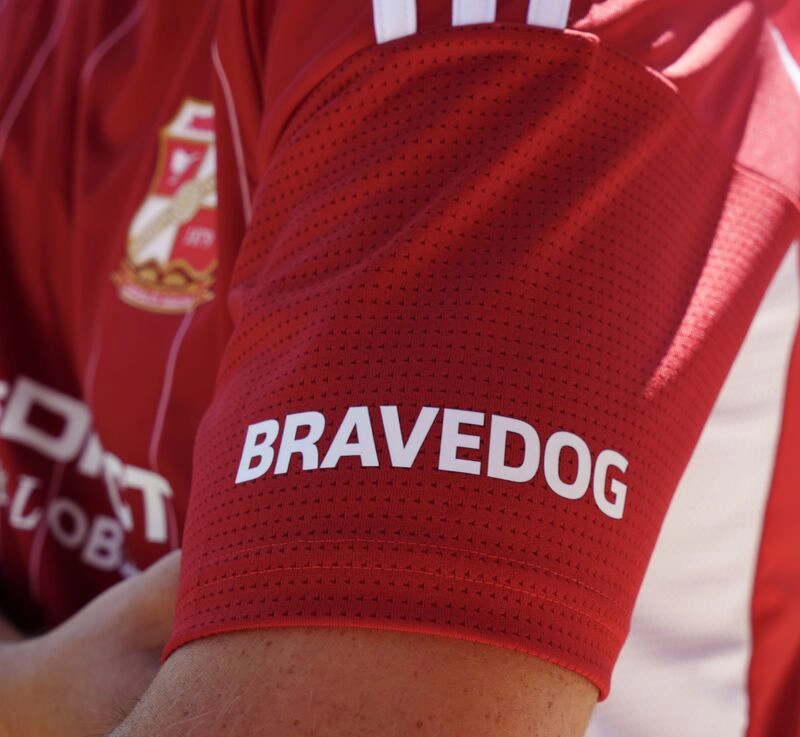
At Bravedog, we have spent years producing creative work within football. We understand its peculiar combination of deep tradition and constant urgency. Everything matters, everything is emotional and almost everything is needed sooner than expected.
That is precisely why the programme remains interesting.
It demands strategy, storytelling, research, design discipline and an understanding of the audience. It must satisfy commercial realities without feeling commercialised. It needs to honour history without becoming trapped in nostalgia. It has to feel like part of the club, not simply a publication carrying its badge.
Most importantly, it has to be worth keeping.
The matchday programme is not dead. But the version that existed primarily to deliver information probably is.
What replaces it can be more valuable: a carefully edited expression of the club, the fixture and the people who give both their meaning.
The final whistle turns every game into history.
The programme gives us something to put on the shelf.