Why Swindon Is Finally Finding Its Voice
For years, Swindon has suffered from a peculiar problem. It hasn't been a shortage of talent, ambition or innovation. It has been a shortage of confidence in telling its own story.
Mention Swindon to someone outside the region and the responses are often predictable. The Magic Roundabout. The railway works. A place people pass on the M4 between London and Bristol. Yet spend time with the businesses, entrepreneurs, educators and innovators who call the town home and a very different picture emerges. You'll find technology firms exporting globally, creative businesses delivering work for national brands, life sciences organisations conducting world-class research and founders building ambitious companies from coworking desks and converted industrial spaces.
The reality of modern Swindon has long outpaced its reputation.
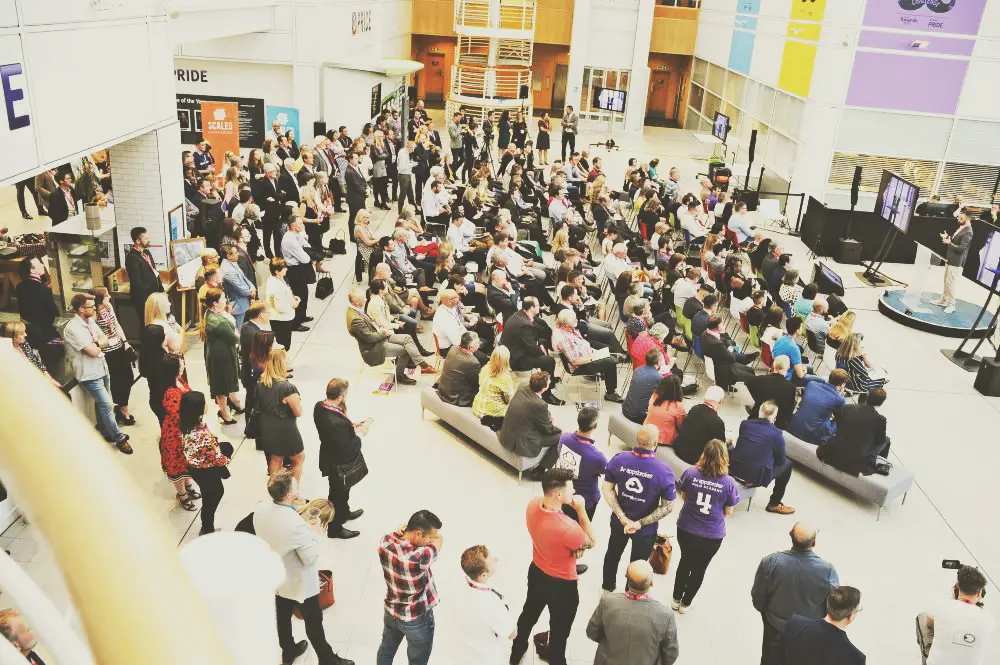
That disconnect is perhaps why the arrival of TEDx Railway Village this June feels significant. Not because a TEDx event alone will transform a town, but because it reflects something broader that has been happening beneath the surface for several years. Under the theme 'Lines of Connection', the event will bring together speakers and audiences from across sectors and disciplines, creating a platform for ideas, conversations and perspectives that might otherwise remain hidden inside offices, studios and meeting rooms.
In many places, a TEDx event would be just another date in the cultural calendar. In Swindon, it feels more symbolic. It suggests a town becoming increasingly comfortable with showcasing its ideas rather than quietly keeping them to itself.
The timing is notable. Across Swindon, a growing network of technology meetups, business communities, creative collaborations and innovation programmes is beginning to create something more substantial than a collection of isolated events. The conversations taking place around the Railway Village, Carriage Works, Workshed and the wider innovation ecosystem point towards a community that is starting to recognise the value of connection itself.
This matters because successful places are rarely defined by infrastructure alone. New buildings, transport links and investment programmes are important, but they are not what create innovation. Innovation happens when people from different backgrounds, industries and disciplines repeatedly collide. It happens when designers meet engineers, when educators connect with entrepreneurs, and when researchers encounter businesses capable of turning ideas into commercial reality.
In that sense, the TEDx theme could hardly be more appropriate. The future of Swindon is unlikely to be shaped by a single development, organisation or flagship project. Instead, it will be determined by how effectively the town's creative, technology, education and life sciences sectors connect with one another.
This is where Swindon holds a unique advantage. Positioned between some of the UK's most powerful innovation economies, including Bristol, Oxford, Reading and London, the town has often viewed itself through the lens of competition. The conversation has traditionally centred on attracting talent, retaining graduates and preventing investment from flowing elsewhere. Yet there is an alternative perspective. Swindon's opportunity may not lie in competing with these places at all, but in connecting them.
The businesses most likely to succeed over the next decade are those operating across disciplines rather than within them. Increasingly, value is being created at the intersection of technology and creativity, research and commercialisation, engineering and design. Places capable of bringing those worlds together are becoming increasingly important, and Swindon's industrial heritage, strategic location and growing culture of collaboration position it surprisingly well to play that role.
Perhaps this is ultimately a branding story.
Not in the superficial sense of logos, campaigns or slogans, but in the deeper sense of how a place understands itself. The strongest place brands are not manufactured. They reveal truths that already exist. Their role is not to convince people of something that isn't there, but to help people recognise what has been there all along.
For too long, Swindon has often found itself explaining what it is. Increasingly, it feels as though the town is beginning to express what it could become.
That may sound like a subtle distinction, but it is an important one. Explanation is defensive. Expression is confident. One seeks validation. The other generates momentum.
A TEDx event will not transform Swindon overnight. Neither will a tech meetup, a coworking space or a regeneration project. Yet collectively they contribute to something more powerful than any individual initiative. They help create a culture in which ideas are shared, ambition becomes visible and success stories are celebrated rather than hidden.
For businesses, that matters. For investors, it matters. For talented people deciding where to build their careers, it matters even more.
Swindon has never lacked ideas. What it has lacked, at times, is a platform capable of bringing those ideas together and projecting them outward. The signs suggest that is beginning to change.
And as the town's confidence grows, so too does its ability to shape its own narrative rather than allowing others to write it on its behalf.