Turning Industrial Heritage into a Future-Facing Place Brand
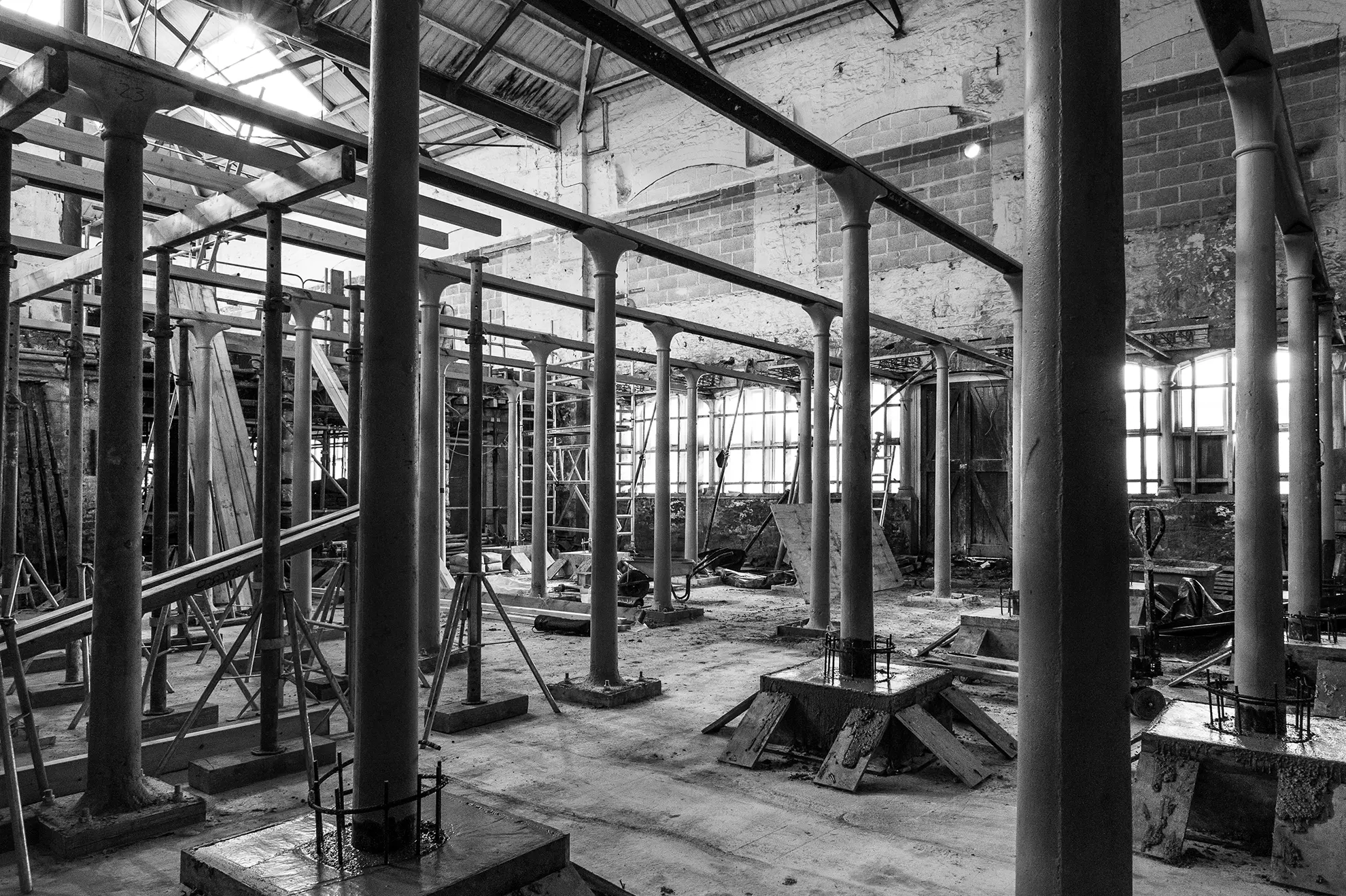
Swindon was built on industry. Not politely. Not gradually. But decisively, with iron, steam and labour. The railway did not simply pass through the town; it defined it. Engineering works powered the Great Western Railway, shaping Swindon’s economy, its streets and its collective identity. The legacy of that era still sits in brick, steel and geometry across The Works, the historic railway heritage area that once formed the beating industrial heart of the town.
Carriage Works sits within this landscape. Part of The Works, and inseparable from Swindon’s wider railway story, it carries a lineage that cannot be fabricated or replicated. But heritage alone is never enough. As industrial towns evolve, the challenge is not how to preserve buildings, but how to reframe them with relevance. The question facing Carriage Works was not how it once functioned, but what role it should play next.
When Bravedog was appointed to develop the brand identity for Carriage Works, this tension was central to the brief. The site already had architectural presence and historical weight. Industrial brick, engineered proportions, the physical memory of production. What it needed was not restoration for nostalgia’s sake, but repositioning. Heritage had to become momentum.
That distinction shaped everything that followed. This was never about creating a museum identity or romanticising the past. Carriage Works is a living commercial environment, anchored by Workshed, the coworking space at its heart, and surrounded by studios and units housing digital, tech and creative businesses. The brand needed to speak to that reality. It had to honour where the site came from while making a confident case for where it was going.
Place brands often fail by falling into extremes. Some cling too tightly to history, turning heritage into aesthetic decoration. Others erase it entirely, opting for generic language and visual shorthand that could belong anywhere. Carriage Works required neither. Its railway lineage is genuine, and that authenticity matters, particularly to modern businesses who value craft, making and precision. But authenticity only works if it is translated, not preserved in aspic.
The strategic decision was to treat heritage as a foundation rather than a feature. The brand draws on inherited qualities rather than visual clichés. Precision, structure and production are values that connect Swindon’s engineering past with contemporary digital culture. Code is built. Platforms are engineered. Products are shipped. In that sense, Carriage Works is not reinventing itself so much as continuing a story of making, through different means.
From the outset, positioning was the cornerstone of the project. Carriage Works was defined as a purposeful place brand, rooted in heritage and designed for what’s next. It is not serviced offices. It is not flexible workspace dressed up in aspirational language. It is a campus for serious, forward-thinking businesses who care about environment, identity and intent. That clarity became the filter through which every creative decision was made.
The visual identity reflects this restraint. Subtle references to engineering geometry and industrial order underpin the system, supported by confident typography and a palette that feels contemporary without losing weight. The brand does not shout for attention. It stands with confidence. In a marketplace crowded with glossy coworking clichés, that restraint becomes a differentiator in itself.
Environment, after all, is strategy. Where businesses choose to locate is no longer dictated purely by necessity. In a hybrid world, location is deliberate. Context shapes behaviour. Teams operate differently in environments that carry meaning and ambition than they do in anonymous office parks. Not because exposed brick improves productivity, but because place signals standards.
Carriage Works positions itself as an environment for businesses that are building something of substance. The brand reinforces that message quietly but consistently. It tells prospective tenants that this is a place where ideas are made real, where industrial heritage meets contemporary capability, and where ambition has precedent. That matters when attracting high-growth SMEs. It matters when speaking to investors. And it matters when businesses based here pitch nationally, not just locally.
Crucially, the brand reframes Carriage Works not as a collection of units, but as an ecosystem. Workshed plays a pivotal role in this, acting as the coworking space at the heart of the campus, where early-stage and scaling businesses can embed themselves in the environment. As companies grow, the surrounding studios and commercial units allow them to evolve without leaving the site. This progression is intentional. It is designed, not incidental.
The identity needed to reflect that journey. It needed to communicate that Carriage Works is somewhere businesses can start, scale and stay. That sense of continuity is powerful in a sector often characterised by transience. It also aligns with Swindon’s wider regeneration narrative, positioning The Works not simply as a heritage area being repurposed, but as a living part of the town’s economic future.
For that reason, longevity was non-negotiable. This brand was never about launch-day visuals or short-term marketing impact. It had to function as a system, capable of stretching across signage, digital platforms, marketing, social media, tenant communications and environmental graphics without dilution. It needed to serve multiple audiences simultaneously, from commercial agents and council stakeholders to the businesses calling Carriage Works home.
That distinction marks the difference between a logo project and a place brand. Carriage Works is not a campaign. It is a long-term regeneration story, embedded within one of Swindon’s most historically significant areas. The identity needed to be robust enough to grow with it.
In reframing Carriage Works, the past was never erased. It was recalibrated. Rather than leaning on nostalgia, the brand focuses on continuity of purpose. Engineering gave way to digital, but the mindset remains. Precision still matters. Craft still matters. Making still matters.
In doing so, Carriage Works becomes more than a building. It becomes a signal. To talent, to investors, to ambitious businesses considering where to base themselves next. In a regional context, that signal is powerful. It positions Swindon not as a town looking back at its industrial legacy, but as one actively shaping its next chapter.
A strong place brand is an economic tool. It attracts the right people, reassures the right stakeholders and helps communities see their future reflected in their environment. That is what this project set out to achieve.
Not simply an identity for Carriage Works.
But a platform for what comes next.
Bravedog works with organisations navigating change - helping places with history find clarity, confidence and relevance for what comes next.